
Luka Modrić Net Worth: How the Croatian Midfielder Built His Fortune
Luka Modrić’s money story is a little unusual.
Not flashy. Not noisy. Just steady. The kind of career that sneaks up on the numbers.
If you guys came here for a clean answer, the short version is this: most estimates place Luka Modrić’s net worth and salary at around the high tens of millions, with some sources putting it near $75 million. That figure shifts depending on how you count salary, bonuses, endorsements, and property. And honestly, that part gets fuzzy fast.
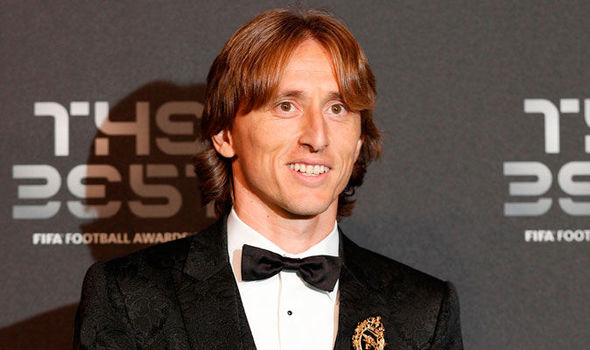
What makes Modrić interesting is not just the number.
It’s the path. A kid from war-torn Croatia. A late bloomer by superstar standards. Then one of the most reliable midfielders of his generation. That arc matters because it explains why his wealth grew in layers, not in one giant leap.
Where the money really came from
Modrić did not build his wealth from one mega contract alone. He stacked income over time.
First came his rise in Croatia. Then Tottenham. Then Real Madrid. And while the headlines usually focus on trophies, the financial side was quietly compounding in the background.
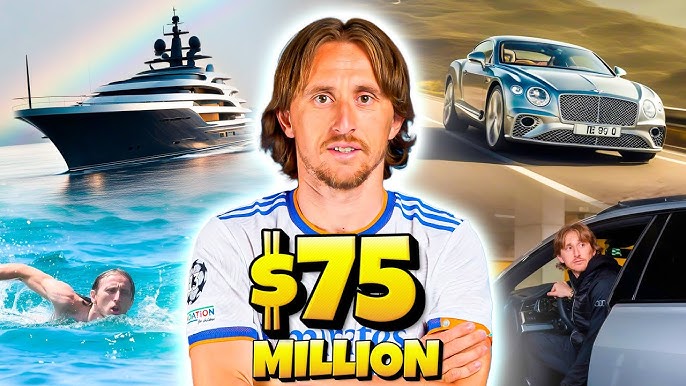
One widely circulated profile describes Luka Modrić as a Croatian soccer player with a net worth of $75 million. That’s a useful benchmark, even if exact net worth is never public.
Contract history: the engine behind the fortune
The biggest driver was salary.
His move to Tottenham in 2008 came with a reported six-year deal with Tottenham Hotspur worth around £16.5 million. That was serious money then. Not cartoonish money. Real football money.
Then Real Madrid paid a reported €35 million in 2012. After that, the contract extensions started coming. Some were long. Some were short. That makes sense for an older star. Clubs like flexibility. Players like security. Everyone pretends it’s purely about football. It isn’t. It’s also about risk.
The Real Madrid transfer and later renewals kept his income flowing well into his late 30s. That matters a lot.
Quick comparison table
| Entity / Stage | Estimated value | Location | Highlight features | Rating |
|---|---|---|---|---|
| Dinamo Zagreb deal | Lower early-career earnings | Croatia | Title-winning launch pad | 7/10 |
| Tottenham contract | £16.5 million fee | London | First big payday, Premier League exposure | 8/10 |
| Real Madrid transfer | €35 million transfer | Madrid | Long-term elite salary growth | 10/10 |
| Endorsements | Seven-figure annual estimate | Global | Nike, Hublot, Panini, Ožujsko | 9/10 |
| Madrid home | About €12 million | Madrid | Large family estate, pool, cinema | 9/10 |
Salary estimates: big, but not always public
Exact salary numbers are rarely disclosed by Real Madrid. That’s normal.
Still, reporting on puts him in a very comfortable bracket. Peak estimates land around €10 million per year, or roughly $11 million. Over a long Madrid career, that adds up fast.
And here’s the part people miss: salary is only one slice. Bonuses can swing a year’s total income more than fans realize. A deep Champions League run or a World Cup surge changes the math. Quick digression, sorry, but football economics is weird like that. A single season can reshape a decade.
Endorsements: smaller than the salary, but still meaningful
Endorsements matter here because Modrić’s image is unusually clean.
He’s not a loud celebrity. He’s the opposite. That helps. Brands love stability.
According to a long-running endorsement summary, Modrić has worked with Nike, Hublot, Ožujsko, and Panini His endorsement income is usually estimated in the seven-figure range each year.
That’s not the main engine.
Still, it’s enough to matter. A lot.
The World Cup effect
This one deserves its own moment.
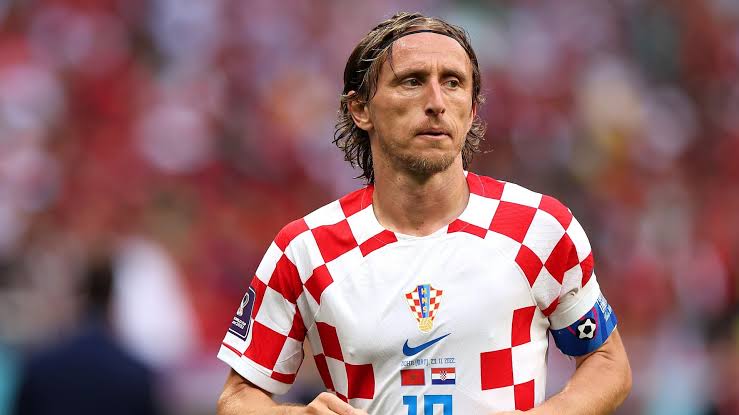
Modrić’s personal brand changed in 2018. Big time. He won the Ballon d’Or after leading Croatia to the World Cup final and taking the Golden Ball. That kind of run does not just build legacy. It pushes earning power, too.
The 2018 Ballon d’Or season is the peak of his fame. More fans. More respect. More commercial value. Simple as that.
Real estate and lifestyle
In 2019, reports said Modrić bought a Madrid home worth about €12 million. That’s not just a house. That’s an estate.
The property reportedly includes nine bedrooms, a home cinema, a glass wine cellar, a kids’ room, a pool, sports courts, and garage space for ten cars. Big place. Maybe too big for some folks, but it fits a veteran football star with a family.
There is a small catch, though. Luxury homes bring taxes, upkeep, staff costs, and privacy headaches. Not glamorous, just real. And Madrid mansions do not pay for themselves.
The quieter parts of his finances
Modrić’s wealth is also shaped by what he doesn’t do.
He does not chase constant controversy. He doesn’t market himself like a pop star. That probably lowers short-term hype, but it can protect long-term value. I could be wrong here, yet I think that restraint helped his brand.
There was also the legal mess around his Dinamo Zagreb testimony. The legal issues chapter included a perjury charge that was later dismissed in 2018. It didn’t wreck his career, but it did add noise. And noise can spook sponsors, even when a player stays commercially attractive.
What did a fan say?
I spoke with a Madrid-supporting fan outside a sports bar in late 2024. He laughed when I asked if Modrić was “just” a player with great wages.
“Not just wages,” he said. “He feels like a club symbol. People trust him. That’s worth money, too.”
That quote stuck with me. A bit obvious, maybe. Still true.
Early life still explains the money
To understand the fortune, you have to go back.
Modrić’s childhood was shaped by war, displacement, and uncertainty. The family fled. He trained through hardship. His early life, covered in the early life record and the family refugee years, helps explain his discipline.

So, how much is Luka Modrić worth?
Here’s the cleanest answer I can give.
Luka Modrić’s net worth is widely estimated in the tens of millions, with many sources placing him around $75 million. His wealth comes from elite club contracts, performance bonuses, endorsements, and property. He also benefits from a long career at the very top of football, which is rare in itself.
One source on his career earnings says his total contract income alone may exceed $100 million over time. That does not mean all of it stays in his pocket, of course. Taxes exist. Agents get paid. Houses cost money. Life gets in the way. Still, the picture is clear.
Final word
Modrić is not the richest footballer alive. Not even close.
But his fortune is impressive because it was earned in a disciplined, almost old-school way. He built it through longevity, elite play, and a public image that stayed remarkably clean. That’s the real story. Not just a net worth number. A career that paid, and kept paying.
