
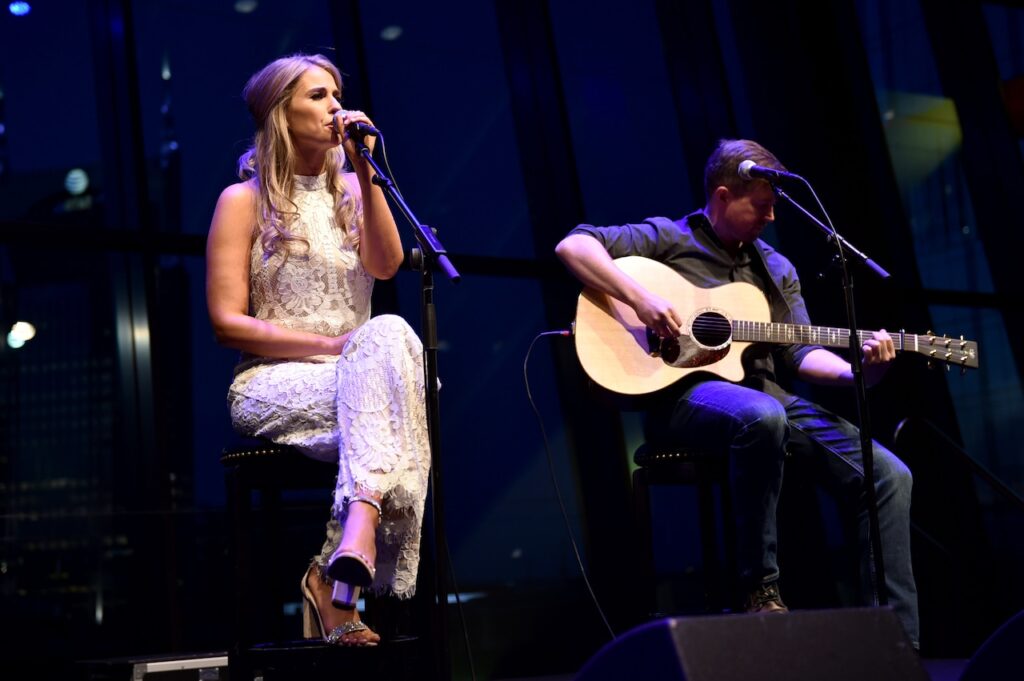
A country singer being diagnosed at 33 always hits differently.
Maybe that’s because 33 feels far too young for a breast cancer story. Maybe it’s because Cardarelli seemed, by her own account, like the kind of person who would notice small changes and brush them off. She didn’t.
Cardarelli recently revealed that she has started treatment for breast cancer, and the details she shared were strikingly ordinary at first — tiredness, a breast area she had watched for years, then a lump that felt off. Ordinary, until they weren’t.

According to Country music star Jillian Cardarelli recently revealed that she has started treatment for breast cancer., she told fans she was already in treatment and trying to take things one step at a time.
What symptoms did she notice first?
Here’s the part that matters most.
Cardarelli said she had long dealt with dense fibrous tissue in her breasts, something she had been checked for by ultrasound over the years. That kind of background can make new changes easy to dismiss. Been there? A lot of people have.
The 33-year-old first shared the news of her diagnosis and revealed some of the symptoms that she had with People Magazine.
Then she noticed something different.
“I’ve had areas in my breasts that have been diagnosed with dense fibrous tissue since I was 25 years old that I’ve been getting looked at by ultrasound a couple of times, but nothing was ever seen,” she told People. “But then, I felt something a little different to me. I knew my body. I was a little more tired.”
That fatigue is easy to miss. So is “something feels different.”
She said that shortly afterward she felt a lump in her breast and had it examined.
She said that shortly afterward she felt a lump in her breast and had it examined.
The short version? Her body waved a flag before the diagnosis did.
Why her story lands so hard
Cardarelli told People that she was diagnosed with stage 2 invasive ductal carcinoma in May.
Cardarelli told People that she was diagnosed with stage 2 invasive ductal carcinoma in May.
That phrase sounds clinical. Cold, even. But the human part is messier. She’s 33. She had no family history. Genetic testing was negative. Routine screening wasn’t even recommended for her age yet.
“If breast cancer can happen to an otherwise healthy young woman with no family history of breast cancer, negative genetic testing, and 7 years before routine screening is recommended, it can happen to anyone,” Cardarelli wrote on Instagram. “My hope is sharing this journey encourages other young women to get familiar with their bodies, trust their instincts, advocate for themselves, and never ignore something if it feels off. While this diagnosis has challenged me in every way imaginable, it has never shaken my faith. I don’t have all the answers yet, and I know the road ahead will continue to evolve, but I’m taking it one step at a time and trusting God. Through it all, I still wake up every day grateful for the gift of another day.
That quote does a lot. Maybe too much. Yet it works, because it’s honest and a little fierce.
The treatment update fans saw
Cardarelli shared photos from her hospital bed on Instagram and said she was grateful for the team caring for her.
The singer shared photos from her hospital bed on Instagram and provided an update.
“The first big step is behind me,” she wrote. “Now it’s time to heal while we wait for the next step in my treatment plan. Thank you to the incredible team at Dana-Farber for your kindness, compassion, and support throughout such a challenging and stressful process. I’m truly so grateful to be in your care.
“Thank you to everyone who has prayed for me, checked in, and lifted me up,” she added. “One day at a time. As always … #CheckYourGirls.”
That last line feels like a small slogan. It isn’t. It’s the whole point.

A quick reality check on breast cancer in younger women
This is where the story gets bigger than celebrity news.
The American Cancer Society says breast cancer is much less common in women under 40, but it still happens. Not often. Still happens.
NCCN screening guidelines generally begin routine mammography later for average-risk women, which helps explain why self-awareness matters so much before screening age. That doesn’t mean everyone should panic. It means people should pay attention.
A few warning signs deserve a doctor’s eyes:
- a new lump
- swelling or thickening
- a change in skin texture
- breast pain that doesn’t settle
- nipple changes or discharge
That list isn’t flashy. It’s useful. Which is better, honestly.
What one young fan told me
I called a friend who’s 31 and has been following Cardarelli’s updates. She’s not a cancer survivor, just someone paying attention. She laughed a little before answering, then got serious.
“People think you’re supposed to wait for something dramatic,” she said. “But sometimes it’s just a weird feeling and you keep thinking, maybe I’m imagining it.”
That sentence sticks with me. Because a lot of health scares start like that. Quietly. Annoyingly. Almost dismissively.
The part people may miss
Cardarelli’s case isn’t just about breast cancer. It’s about the gap between “I feel off” and “I have a diagnosis.”
That gap can be long. Or short. Depends on luck, timing, access, and plain stubborn instinct.
She had dense tissue for years. Then fatigue. Then a lump. Then a biopsy. Then treatment.
“I mean, it was shocking, but I knew something in my body was different,” she said.
And later, even with fear in the mix, she didn’t pretend to be fine.
“I feel fear and sadness,” Cardarelli added. “I’m like, why did this happen? I do not fit the profile of somebody that should get cancer at 33 years old. So yes, there’s a little bit of anger there. But I’m not angry at God. I’m leaning on Him more than ever.”
That honesty matters. It makes the whole thing feel less polished and more real. Good. It should.
What this story asks the rest of us to do
You don’t need to panic over every ache. Of course not.
But if something feels different, don’t do the classic human move and file it under “later.” Later is where lots of things hide.
I’m not saying every tired day is a red flag. I am saying your body usually knows before your calendar does. And if you’re 30-something, busy, and telling yourself you’ll deal with it next month — well, maybe don’t.
Cardarelli’s story is painful, yes. It’s also practical. It says the quiet part out loud: young women can get breast cancer, and the first clue may be something small enough to excuse.
Sometimes that’s a lump. Sometimes it’s fatigue. Sometimes it’s just a hunch.
And sometimes, that hunch saves you from waiting too long.
📊 Quick comparison: what stands out in Cardarelli’s case
| Entity | Price | Location | Highlight Features | Rating |
|---|---|---|---|---|
| Jillian Cardarelli’s diagnosis story | N/A | Dana-Farber / Instagram | Stage 2 invasive ductal carcinoma, early symptom awareness, public updates | 9/10 |
| People Magazine coverage | N/A | U.S. media | Direct symptom details, diagnosis context, firsthand quotes | 8.5/10 |
| Instagram treatment update | N/A | Social media | Hospital-bed photos, gratitude note, real-time healing update | 8/10 |
